
An exceptional discovery is making waves in the art world:
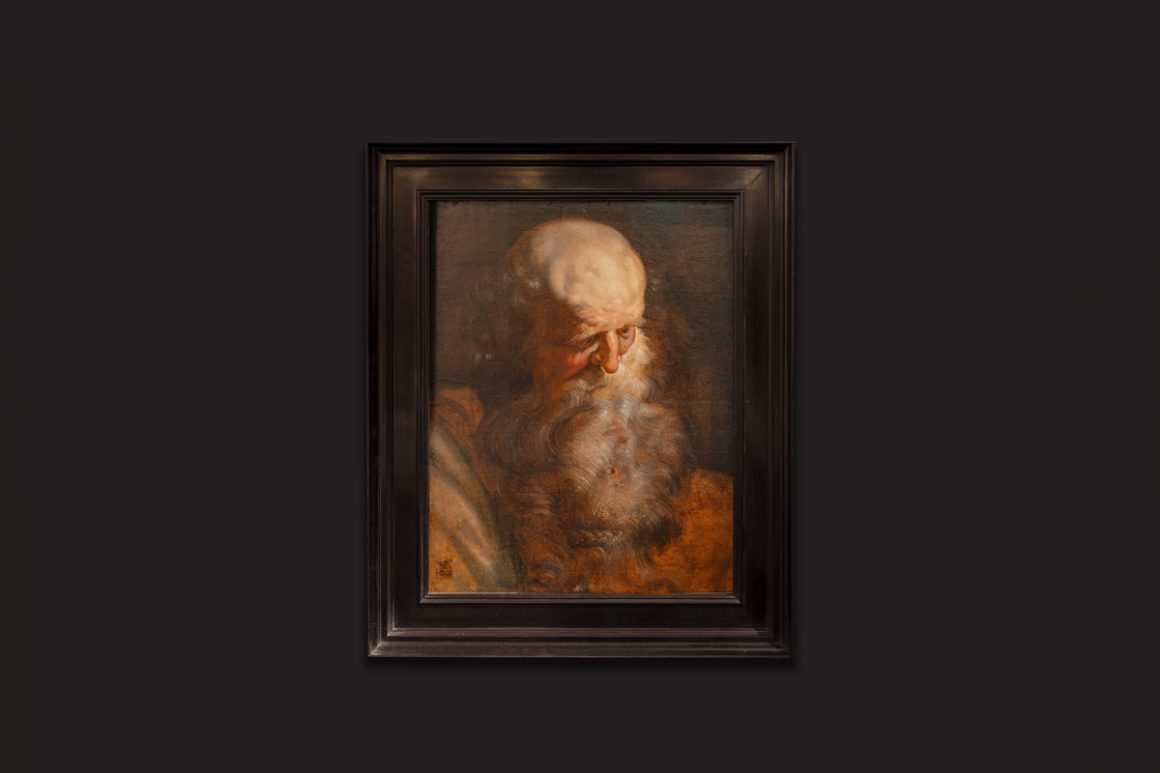
a sketch by Peter Paul Rubens, long considered lost, has resurfaced and will be presented to the public for the first time at the BRAFA Art Fair, from January 25 to February 1, at Brussels Expo.
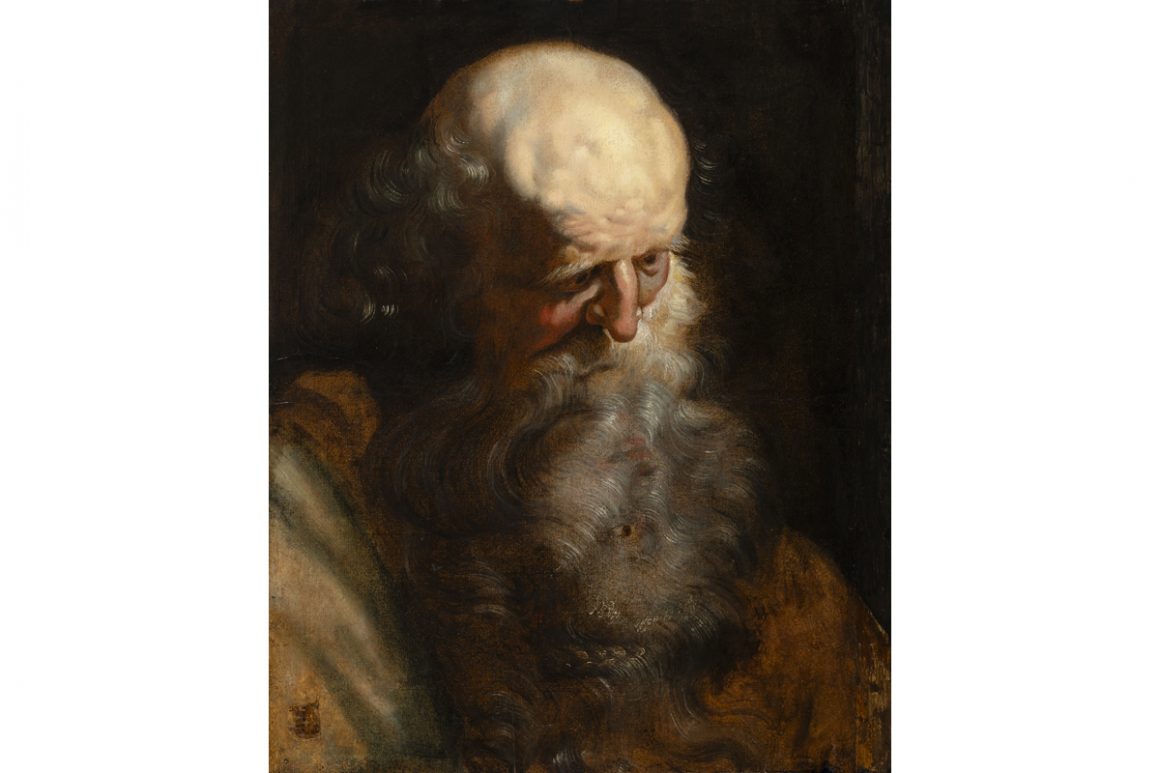
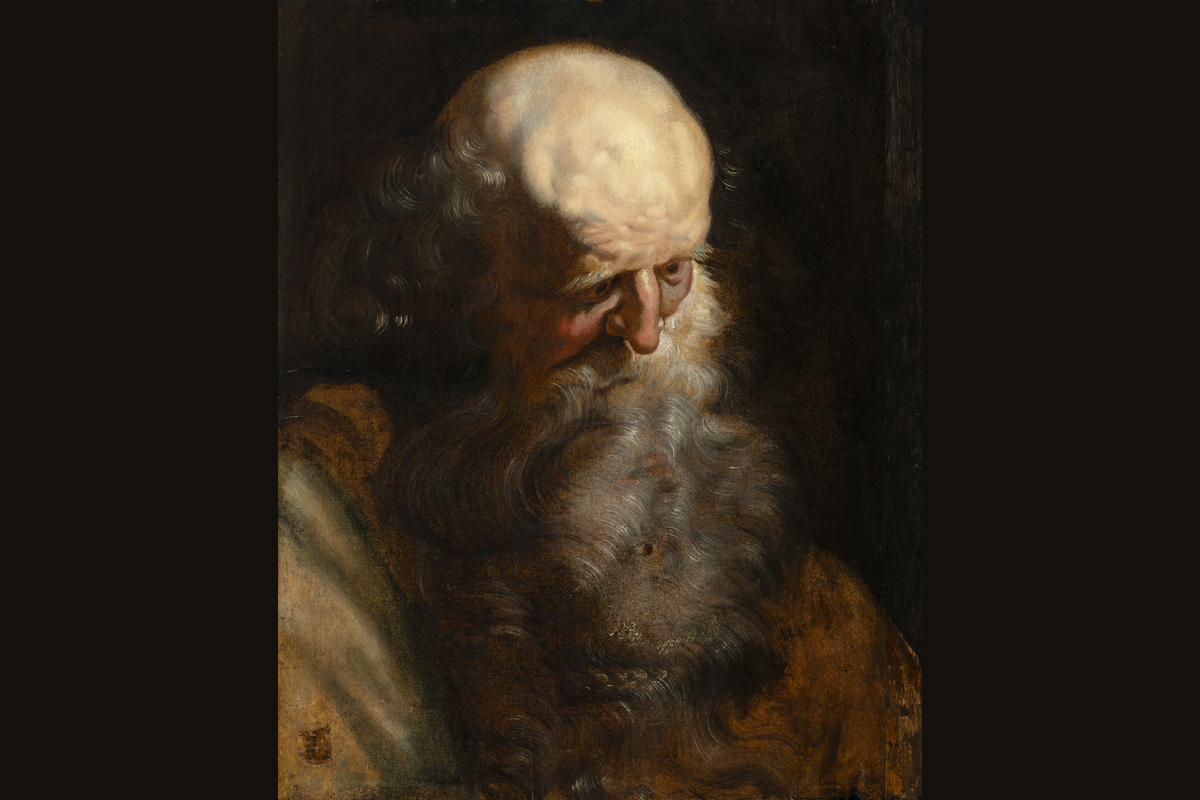
Peter Paul Rubens (Germany, Siegen 1577–1640 Antwerp, Belgium)
Bearded old man, looking down to his left, circa 1609
Oil on paper (laid down on panel)
56.3 x 45.8 cm
(c)Courtesy BRAFA 2026
The work, titled Portrait of an Old Man, was rediscovered by Belgian Old Masters dealer and BRAFA chairmanKlaas Muller. The quality of execution and the expressive power of the portrait immediately caught Muller’s attention. After a thorough comparative study of Rubens’ oeuvre, Muller identified the depicted face as that of a model frequently used by the Antwerp master to portray apostles, kings, and secondary figures during his early years in Antwerp. This face is notably recognizable as Saint Thomas in the Apostles series at the Prado in Madrid, and as Melchior in The Adoration of the Magi at the KMSKA in Antwerp.
To confirm the attribution, the work underwent in-depth art historical analysis by Ben van Beneden, former director of the Rubenshuis. According to him, several features point to an original Rubens study: a spontaneous, vigorous yet precise brush stroke, exceptional virtuosity, and the characteristic use of paper mounted on panel.
This discovery is particularly significant as it may correspond to the lost prototype listed in the catalogue raisonné Study Heads (Corpus Rubenianum Ludwig Burchard, Part XX) by Dr. Nico Van Hout (KMSKA), whose location had remained unknown was considered lost.
From a young age, Rubens produced preparatory drawings; however, it was likely during his Italian period that he began painting oil study heads, following the example of Federico Barocci and Annibale Carracci. “Rubens captured faces in quick, spontaneous sketches, often from multiple angles,” explains Van Beneden. “In this way, he built a visual repertoire of expressive physiognomies that he re-used in his large compositions.”
Upon returning to Antwerp in 1608, when he opened his workshop, Rubens deliberately invested in these studies. “This was his starting capital,” emphasizes Van Beneden. The earliest heads were painted on paper and then mounted on panel, probably to facilitate handling within the workshop.
An additional argument supporting this attribution comes from a fascinating visual detail: the paper reveals an underlying sketch of a young girl, later overpainted by the study of the old man.
When the work is turned upside down, this initial drawing becomes clearly visible beneath the thick gray beard. This element provides early evidence of this workshop practice.
This marks the third major attribution by Klaas Muller to the Antwerp master. His previous discovery, Diana’s Hunt, was sold at BRAFA in 2018 to an international collector and is now on permanent loan at the Snyders-Rockox Museum in Antwerp.
BRAFA 2026 – Klaas Muller © Luk Vander Plaetse
*Note by Ben Van Beneden.
This powerfully painted head study shows a bald, bearded old man, his head slightly bowed and his gaze lowered. Rubens captures the moment with astonishing spontaneity and accuracy. Impasto accents on the nose and skull contrast with transparent brushwork elsewhere, making the face seem to glow out of the darkness.
Surprisingly, the work is painted on a reused sheet of paper. When turned over, the silhouette of a woman’s head appears, partly visible through the model’s beard. This visual echo adds an unexpected layer to the work and bears witness to Rubens’ playful approach to materials and composition.
The study is not merely an exercise: Rubens used this characterful head several times in his oeuvre. It appears as St. Amand(us) in The Elevation of the Cross (Antwerp, Cathedral of Our Lady), St. Thomas in the so-called Apostolado Lerma (Madrid, Museo del Prado), and even as Melchior in The Adoration of the Magi (Madrid, Museo del Prado). The face also appears in The Incredulity of St. Thomas and The Tribute Money, each time in a different role.
Spontaneous, ad vivum head studies such as this served as a visual storehouse for his larger compositions. They reveal his fascination with character, light and expression, as well as his ability to achieve maximum expressiveness with minimal means.
This unique sketch will thus be exhibited to the public for the first time at the 71st edition of BRAFA, offering a rare glimpse into the working methods and creativity of the Flemish master.